CAS Risen – A Chinese Manufacturer Specializing in Anaerobic Adhesives
Lamination Bonding Technology for Motor Cores is a core precision process in the manufacturing of new energy and industrial motors, mainly for the laminated silicon steel structure of motor cores. It replaces traditional mechanical fixation methods such as welding and riveting with special insulating adhesives, and realizes integrated bonding of laminations through temperature and pressure controlled curing. This process does not damage the electromagnetic performance of laminations, and can effectively reduce iron loss, vibration and noise during operation, improving the overall stability and efficiency of motors. It is also a key technology for producing high-efficiency energy-saving motors and new energy vehicle drive motors.
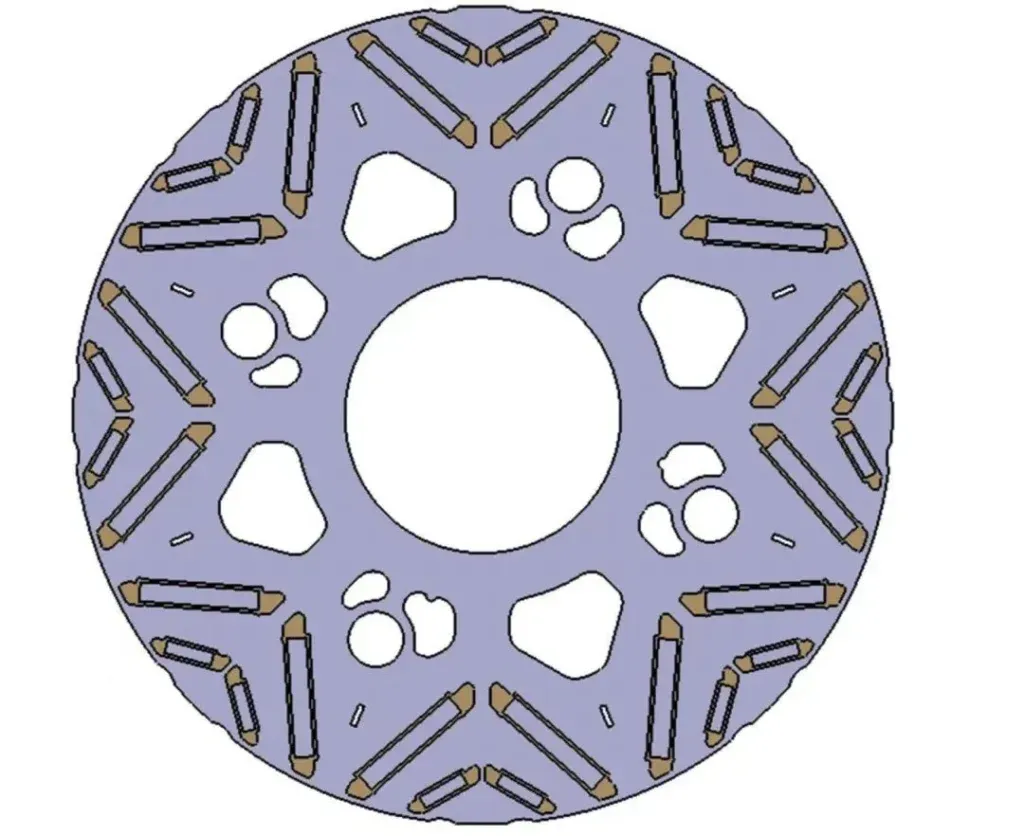
In terms of process principle, this technology relies on thermosetting insulating adhesives, which are evenly coated on the bonding surface of laminations, and then rapidly cured through precise control of temperature and pressure to form a bonding layer with high bonding strength and high insulation, integrating multiple silicon steel sheets into a complete core. Compared with traditional processes, it has no hidden dangers of high-temperature deformation, local stress concentration and interlaminar short circuit, can retain the original electromagnetic properties of silicon steel sheets to the greatest extent, and eliminate gaps and resonance risks of laminations, suitable for mass production of high-precision and long-life motors.
Compared with traditional fixation methods such as welding and riveting, lamination bonding technology has outstanding advantages. On the one hand, it avoids damage to magnetic properties caused by mechanical processing and high temperature, greatly reduces iron loss and eddy current loss, improves motor operation efficiency, and fully complies with the industry requirements of energy saving and consumption reduction under the carbon neutrality goal. On the other hand, special adhesives have the characteristics of high temperature resistance, vibration resistance and aging resistance, which can ensure that the core has no lamination looseness or displacement during long-term operation, not only prolonging the service life of the motor, but also reducing later maintenance costs.
In addition, the integrated bonded structure completely eliminates gaps and resonance between laminations, reducing motor noise by about 5dB and significantly reducing vibration amplitude, suitable for scenes requiring high operation quality such as precision equipment and silent household appliances. At the same time, this process is compatible with silicon steel laminations of different specifications, with flexible and adjustable process parameters, and can be connected to automated assembly line production, balancing production efficiency and product consistency, suitable for industrial mass manufacturing.
Foreign lamination bonding technology started early, originating in Austria in the 1970s. After years of development, European, American and Japanese enterprises occupy a dominant position in the high-end market. European enterprises specialize in R&D of high-end adhesive formulas and focus on bonding processes for large motor cores, mainly suitable for heavy equipment fields such as wind power and rail transit. Japanese companies focus on the optimization of ultra-thin silicon steel self-adhesive coatings, with particularly significant technical advantages in the field of high-frequency and high-speed motors. At present, foreign leading enterprises have opened up the entire industrial chain of “material-formula-process-equipment”, with complete industry standards and top-level product stability and comprehensive performance.
Domestic technology was first introduced in 2002 with the maglev project. After years of independent R&D and domestic research, it has achieved the transformation from following to local breakthroughs. Enterprises such as Baosteel and Shougang have made substantial progress in the R&D of self-adhesive coated silicon steel, and local equipment and formula manufacturers also have the capacity for mass production of mid-end processes. China’s first group standard for self-bonded cores has been officially implemented, and the industrial chain support is gradually improving. However, on the whole, domestic technology still has obvious shortcomings: high-end adhesives are still dependent on imports, the precision of rapid curing process is insufficient, and the localization rate of high-end core equipment is low, with a certain gap from the international top level.
At present, the domestic new energy vehicle industry is growing explosively, the energy efficiency upgrade of industrial motors continues to advance, and coupled with the strong drive of the carbon neutrality policy, lamination bonding technology for motor cores has ushered in a golden period of development with clear future market opportunities. Firstly, there is broad space for domestic substitution. At present, domestic high-end adhesives and core process equipment are highly dependent on imports. Once local enterprises achieve technological breakthroughs, they can quickly seize the market and reduce the external dependence of the industrial chain. Secondly, the demand for new energy vehicle drive motors is surging, and the requirements for processes are constantly improving for 800V high-voltage platforms and high-speed motors. Lightweight and low loss have become core demands, and local enterprises are close to the market and can adapt to the pace of model iteration faster.
In addition, the technical penetration rate of high-end scenarios such as aerospace special motors, servo motors and silent household appliance motors continues to increase, and the demand for lamination bonding technology continues to expand. In the future, intelligent process upgrade, green environmental protection and recyclability, and rapid and efficient curing will become the key for domestic enterprises to break through technical bottlenecks and seize the high-end market.
This technology has been widely used in new energy vehicle drive motors, industrial servo motors, permanent magnet synchronous motors, aerospace special motors, silent household appliance motors, as well as wind power and rail transit equipment motors. Especially in the new energy vehicle industry, it is the core technology supporting the lightweight, high-efficiency and silent development of drive motors, directly helping to improve vehicle range and power performance.
To ensure the effect of process implementation, three key points need to be controlled: first, select special industrial adhesives with high temperature resistance, high insulation and low volatility to eliminate performance problems caused by ordinary adhesives; second, precisely control coating uniformity, curing temperature and pressure to avoid insufficient curing or glue overflow; third, complete multiple tests such as bonding strength, insulation performance and vibration aging to ensure the stability of mass-produced products.